
Walking Jerusalem is less about covering a large number of kilometers than about understanding how quickly the city changes under your feet. A route can begin on a broad avenue, narrow into an Old City lane, rise toward a viewpoint, and pass a prayer space or residential street within the same hour. First-time travelers often underestimate the hills and overestimate how many landmarks can fit into one day. The best walks leave enough space for uneven paving, pauses, queues, shade, conversation, and the unexpected details that make Jerusalem feel like a city rather than a collection of stops.
Jerusalem rewards a route designed around one geographic idea. You might follow gates and walls, connect the Old City to central neighborhoods, walk from a market toward a museum, or leave the urban streets for the forested hills. The route should have a clear beginning and a realistic ending, with a transport option nearby if the group becomes tired. A good plan is not rigid. It gives you enough structure to make decisions without turning every delay into a problem.
Choose a route that matches your energy
Start by looking at elevation, not only distance. Jerusalem’s slopes can make a short route feel substantial, particularly in warm weather or when the walk includes stairs and long periods of standing. A route from Jaffa Gate through the Old City may be compact on a map but physically demanding because of cobblestones, steps, crowds, and frequent stops. A walk along a central street may involve less sightseeing pressure but more traffic, crossings, and uphill movement. Read the shape of the city before deciding what your timetable can hold.
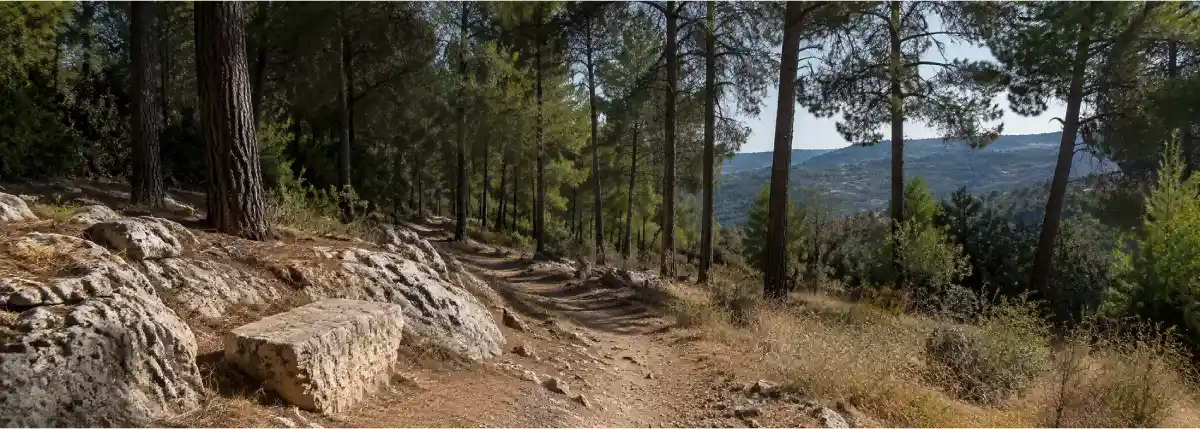
For a first Old City walk, choose an entrance and an exit rather than promising to explore every lane. A First Walk Through Jerusalem’s Ancient Quarters offers a useful framework for moving between gates, markets, sacred places, and viewpoints. If you want a landscape day instead, the Judean Hills collection connects Sataf, forest routes, and short escapes beyond the urban center. The difference between these experiences is part of Jerusalem’s appeal. The city is dense, but its surrounding landscape is close enough to change the mood of a day.
Build the route around a main direction. An uphill walk can be rewarding early in the day, while a downhill route may be gentler after a long museum visit. If a route includes a loop, mark one point where you can turn back without losing the day. A traveler who knows where to shorten the plan will walk more confidently and notice more along the way.
Walk at the city’s pace
Jerusalem has several speeds at once. Markets may be crowded and loud, a courtyard may be quiet, a bus lane may move quickly, and a religious ceremony may ask everyone nearby to pause. Do not expect the whole route to move at the pace of a guided tour. Leave space for people who are commuting, shopping, praying, or carrying out ordinary work. Walking well means knowing when to keep moving and when to stop at the edge of the flow.
Use pauses as part of the itinerary. A bench, a shaded wall, a café, or a broad viewpoint can reset the group before the next climb. When you stop, step away from doorways and narrow passages. In the Old City, a small obstruction can affect many people, especially when visitors are moving in both directions. Keep bags close and avoid spreading across the lane when talking.
Walking slowly also improves historical observation. Look at the way buildings meet the street, the height of a threshold, the repair marks in a wall, the shade created by an upper floor, or the different languages on shop signs. These details often explain how a neighborhood works better than a single landmark. The city’s heritage is not limited to what has a plaque. It is also held in patterns of movement and adaptation.
Pack for stone, sun, and changing weather
Comfortable shoes are the first practical decision. Choose a pair with a secure sole and enough support for stone paving, steps, slopes, and long periods on your feet. Sandals may be comfortable for some travelers, but exposed toes and loose soles are less useful on rough surfaces. Bring water even when the morning feels cool. Dry air, sunshine, and uphill walking can catch visitors by surprise.
Light layers work across the year. Summer walks call for sun protection, a hat, and clothing that allows movement without overheating. In cooler seasons, mornings and evenings can feel sharply different from the middle of the day, and rain can change the condition of stone surfaces. A compact layer or rain shell gives you more freedom to continue without making the route dependent on a perfect forecast. iTravelJerusalem’s first-time visitor guidance also recommends light clothing in summer and warmer layers for cooler seasons.
Carry only what you will use. A small bag is easier at security checks, on crowded buses, and in tight lanes. Keep a phone battery available for maps and transport information, but do not let the screen take over the walk. Download important addresses or save them in a form that does not depend on a constant signal. If the route includes a tunnel, museum, or religious site, check whether separate ticketing or a bag restriction applies.
Treat the street as a shared space
Modest clothing is a practical baseline when a walk may include religious sites. Covering shoulders and knees gives you flexibility, but individual places can have more specific expectations. Carry a scarf or light layer if it helps you adapt. Dress is not only a matter of entry. It signals that you understand the route passes through spaces where prayer and community life are taking place.
Ask before photographing people, shop interiors, private courtyards, or active worship. Keep voices low around prayer spaces and do not cross a barrier because a view looks interesting. If a route becomes crowded, follow the local flow instead of forcing your way through. These small choices make a visible difference to residents and to other visitors.
Transport is part of a walking plan. Note where you can end the route, and check current bus, light rail, taxi, and road information when the day involves a longer connection. Do not build a schedule around an exact transfer when a ceremony, security check, traffic disruption, or weather change could alter the timing. A flexible finish is especially useful for families, older travelers, and anyone carrying equipment.
Walking Jerusalem becomes easier when the plan is generous. Choose one route, keep a second option nearby, and let the city’s texture guide your attention. The traveler who walks with comfortable shoes, enough water, realistic expectations, and respect for shared space will see more of the city and remember less of the timetable.
References & Visitor Notes
General clothing, weather, and first-visit planning advice is informed by iTravelJerusalem’s first-time visitor guide and its Jerusalem attractions guide. Route context is complemented by the JPost Travel guides to the Old City and Judean Hills. Check current transport, access, and weather information before setting out.